

Merriam-Webster defines homophones as: words that sound the same but are different in meaning or spelling. Homophones that are spelled differently are also called heterographs, such as to, too, and two. Ever hear a story about a bare bear? Tell no tale about that tail. What about a knight who was lost in the night? I always pause for paws when I’m driving because that’s the right thing to do, then I can write about it.
How about hoar and rime? Today I’m talking about a wonder of nature, not poetic prostitutes.
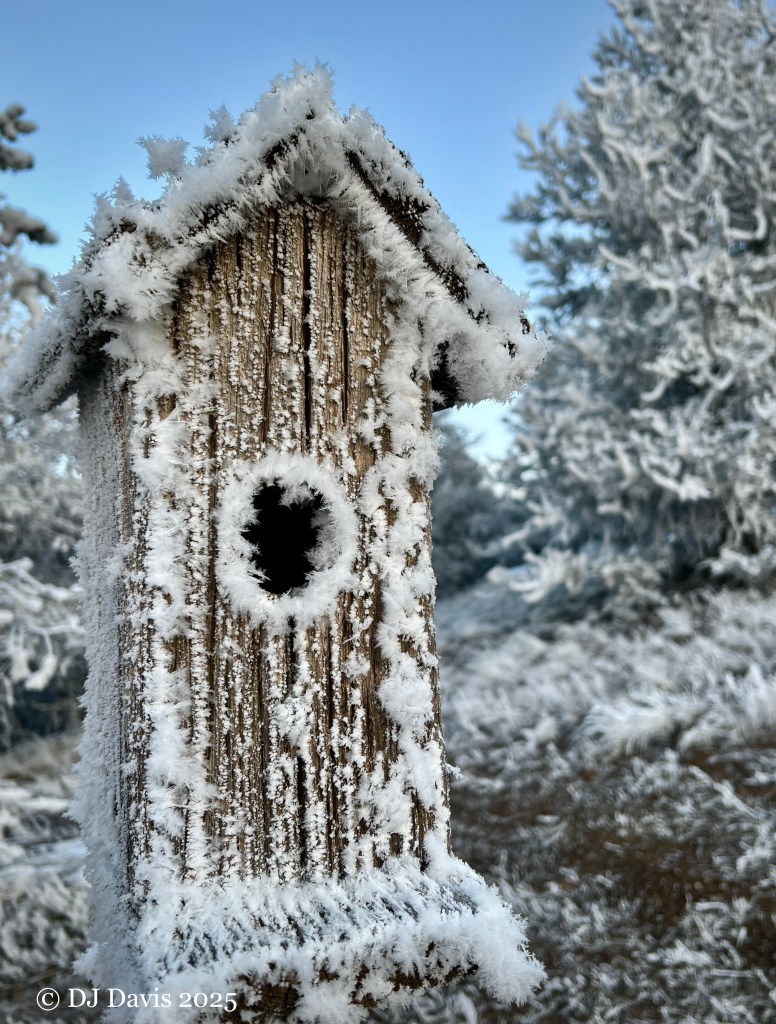
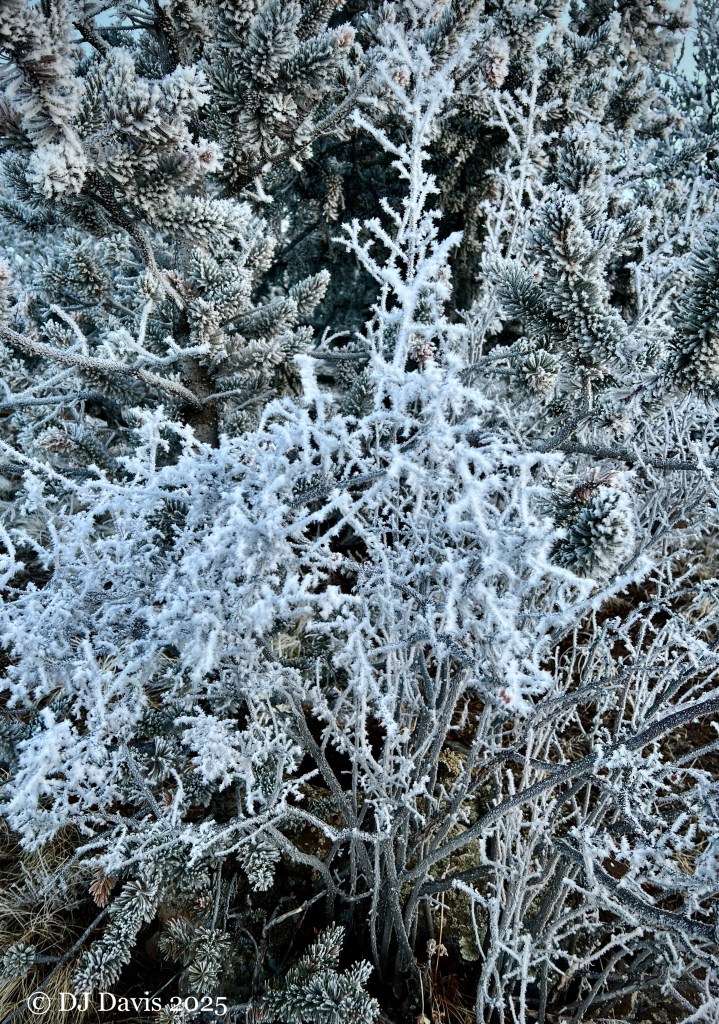
Hoar frost forms on cold, clear, calm nights when air moisture levels are high and surface temperatures fall below the dew point—the temperature at which moisture in the air condenses. The moisture immediately freezes into a delicate lace of ice crystals. Hoar frost is stunning and fleeting. The slightest breeze or the first rays of morning sun sends the ice back into vapor.
Rime ice, one the other hand, is created by air movement. Supercooled water droplets remain liquid until they touch a surface where they flash-freeze. Unlike delicate frost, rime ice builds up as more water freezes on the same surface. Wind sculpts the ice into sparkling waves, clusters like transparent magic berries, or smooth candy coatings.
What brought me here thinking you might want to hear this? A beautiful cold morning that gifted me with hoar frost! I took a dazzling walk in the frigid, still air before losing the frost to the rising sun. The site was a sight to behold. And then my little writer’s brain took over and, well…
Weather and words combined and I learned something about both.



Sign up for more mountainous fun and freebies!
Leave a Reply
You must be logged in to post a comment.